I will introduce, demonstrate and guide students through the application of Visual Learning Strategies. Inspired by the three-question visual thinking strategies protocol, this approach to discussion-based teaching and learning encompasses all four domains of language acquisition while serving as an effective tool across various subjects within the curriculum.
During the Visual Learning Strategies workshop, I will talk about my nonfiction illustrated books that explore the significance of walls, immigrant stories, welcoming traditions and the the daily lives of children. I am thrilled to introduce Who Needs aStatue? my newest book that will be published in 2024.I am available to conduct up to four one-hour workshops per day, with a capacity of 30 students or one full class per workshop. I will also offer a teacher’s workshop before or after the school day.
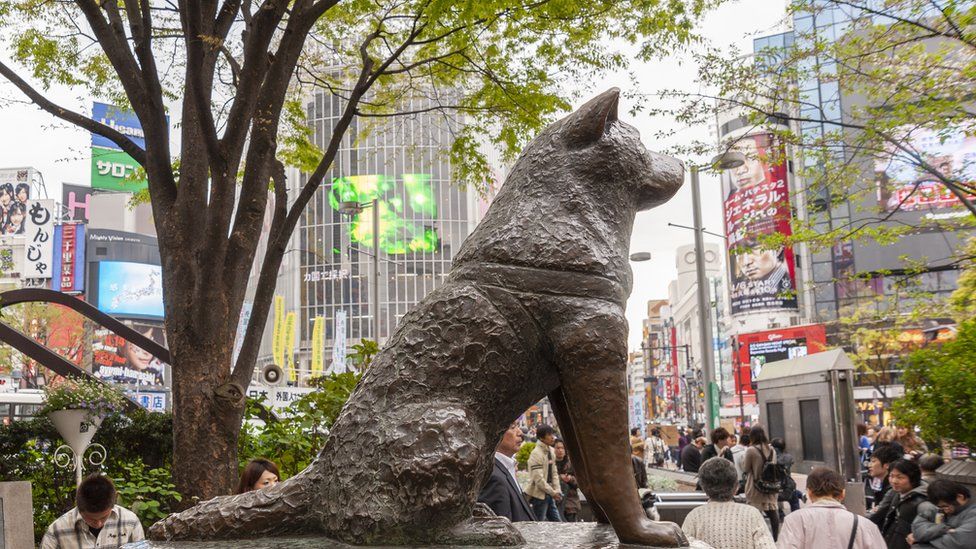
Image caption,A statue of Hachiko has stood outside Shibuya station in Tokyo since 1948
By Nicholas Yong
BBC News, Singapore
The Chinese tagline on the movie poster says it all: “I will wait for you, no matter how long it takes.”
It tells the true story of Hachiko, the faithful dog that continued to wait for its master at a train station in Japan long after his death.
The cream white Akita Inu, born 100 years ago, has been memorialised in everything from books to movies to the cult science fiction sitcom Futurama. And the Chinese iteration – the third after a Japanese version in 1987, and the Richard Gere-starrer in 2009 – is a hit at the box office.
There have been tales of other devoted hounds such as Greyfriars Bobby, but none with the global impact of Hachiko.
A bronze statue of him has stood outside Shibuya Station in Tokyo, where he waited in vain for a decade, since 1948. The statue was first erected in 1934 before being recycled for the war effort during World War Two. Japanese schoolchildren are taught the story of Chuken Hachiko – or loyal dog Hachiko – as an example of devotion and fidelity.
Hachiko represents the “ideal Japanese citizen” with his “unquestioning devotion”, says Professor Christine Yano of the University of Hawaii – “loyal, reliable, obedient to a master, understanding, without relying upon rationality, their place in the larger scheme of things”.
The story of Hachiko
Hachiko was born in November 1923 in the city of Odate in Akita prefecture, the original home of Akitas.
A large-sized Japanese dog, the Akita is one of the country’s oldest and most popular breeds. Designated by the Japanese government as a national icon in 1931, they were once trained to hunt animals like wild boar and elk.
“Akita dogs are calm, sincere, intelligent, and brave [and] obedient to their masters,” said Eietsu Sakuraba, author of an English language children’s book about Hachiko. “On the other hand, it also has a stubborn personality and is wary of anyone other than its master.”
The year Hachiko was born, Hidesaburo Ueno, a renowned agricultural professor and a dog lover, asked a student to find him an Akita puppy.
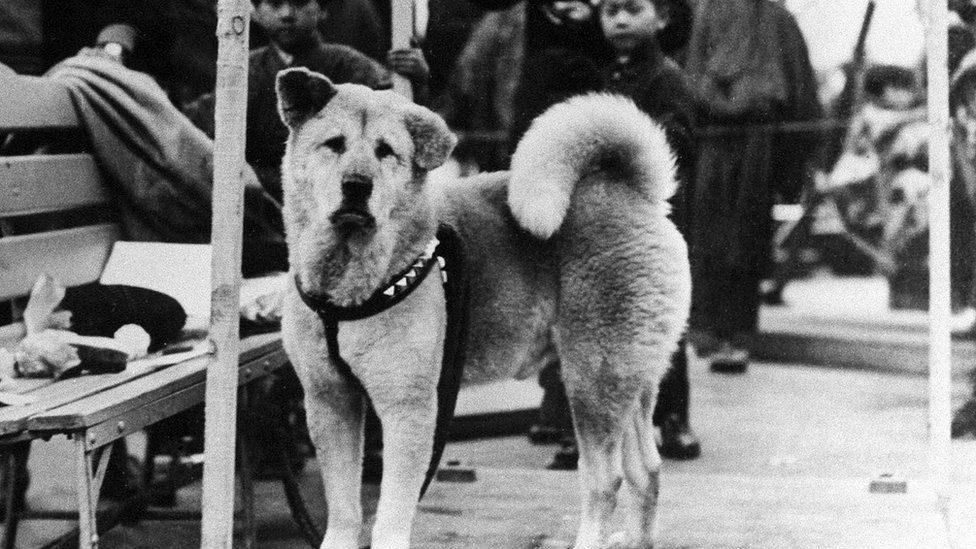
Image caption,Hachiko became nationally known in Japan after a newspaper article in 1932
After a gruelling train journey, the puppy arrived at the Ueno residence in Shibuya district on 15 January 1924, where it was initially thought dead. According to Hachiko’s biographer, Prof Mayumi Itoh, Ueno and his wife Yae nursed him back to health over the next six months.
Ueno named him Hachi, or eight in Japanese. Ko is an honorific bestowed by Ueno’s students.
The long wait
Ueno took a train to work several times a week. He was accompanied to Shibuya station by his three dogs, including Hachiko. The trio would then wait there for his return in the evening.
On 21 May 1925, Ueno, then 53, died of a cerebral hemorrhage. Hachiko had been with him for just 16 months.
“While people were attending the wake, Hachi smelled Dr Ueno from the house and went inside the living room. He crawled under the coffin and refused to move,” writes Prof Itoh.
Hachiko spent the next few months with different families outside Shibuya but eventually, in the summer of 1925, he ended up with Ueno’s gardener Kikusaburo Kobayashi.
Having returned to the area where his late master lived, Hachiko soon resumed his daily commute to the station, rain or shine.
“In the evening, Hachi stood on four legs at the ticket gate and looked at each passenger as if he were looking for someone,” writes Prof Itoh. Station employees initially saw him as a nuisance. Yakitori vendors would pour water on him and little boys bullied and hit him.
However, he gained nationwide fame after Japanese daily Tokyo Asahi Shimbun wrote about him in October 1932.
The station received donations of food for Hachiko each day, while visitors came from far and wide to see him. Poems and haikus were written about him. A fundraising event in 1934 to make a statue of him reportedly drew a crowd of 3,000.
Hachiko’s eventual death on 8 March 1935 made the front page of many newspapers. At his funeral, Buddhist monks offered prayers for him and dignitaries read eulogies. Thousands visited his statue in the following days.
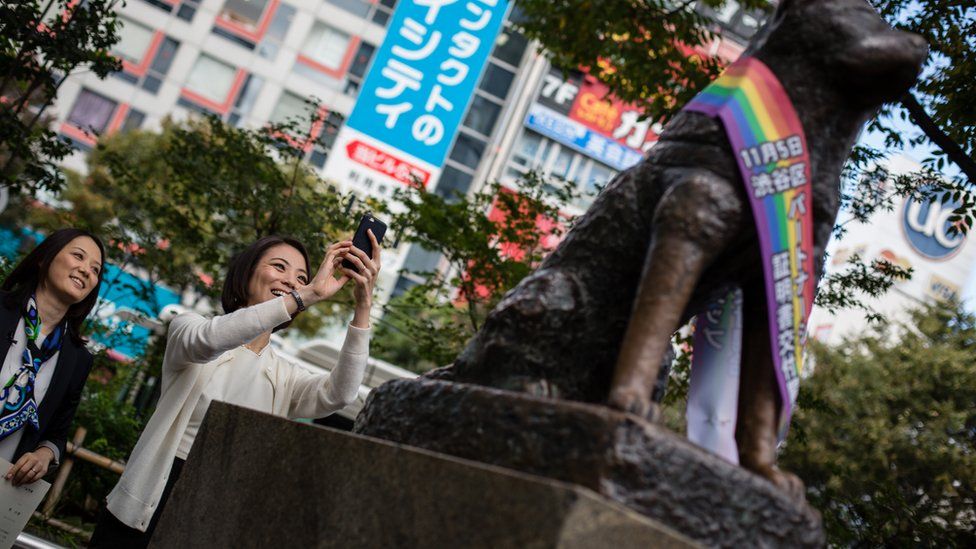
Image caption,Hachiko’s statue is a popular spot and often a place for political protests
In impoverished post-war Japan, a fundraising drive for a new statue of Hachiko even managed to raise 800,000 yen, an enormous sum at the time, worth about 4bn yen (£22m; $28m) today.
“In retrospect, I feel that he knew that Dr Ueno would not come back, but he kept waiting – Hachiko taught us the value of keeping faith in someone,” wrote Takeshi Okamoto in a newspaper article in 1982. As a high school student, he had seen Hachiko at the station daily.
Remembering Hachiko
Every year on 8 April, a memorial service for Hachiko is held outside Shibuya Station. His statue is often decorated with scarves, Santa hats and, most recently, a surgical mask.
His mount is on display at the National Museum of Nature and Science in Tokyo. Some of his remains are interred at the Aoyama Cemetery, alongside Ueno and Yae. Statues of him have also been cast in Odate, Ueno’s hometown Hisai, the University of Tokyo and Rhode Island, the American setting for the 2009 movie.
Odate also has a series of events lined up this year for his 100th birthday.
Will the world’s most loyal dog still be celebrated a century from now? Prof Yano says yes because she believes the “heroism of Hachiko” is not defined by any particular period – rather it is timeless.
Mr Sakuraba is equally optimistic. “Even 100 years from now, this unconditional, devoted love will remain unchanged, and the story of Hachiko will live on forever.”
Hachiko: The world’s most loyal dog turns 100
Published3 days ago
Share
Image caption,A statue of Hachiko has stood outside Shibuya station in Tokyo since 1948
By Nicholas Yong
BBC News, Singapore
The Chinese tagline on the movie poster says it all: “I will wait for you, no matter how long it takes.”
It tells the true story of Hachiko, the faithful dog that continued to wait for its master at a train station in Japan long after his death.
The cream white Akita Inu, born 100 years ago, has been memorialised in everything from books to movies to the cult science fiction sitcom Futurama. And the Chinese iteration – the third after a Japanese version in 1987, and the Richard Gere-starrer in 2009 – is a hit at the box office.
There have been tales of other devoted hounds such as Greyfriars Bobby, but none with the global impact of Hachiko.
ADVERTISEMENT
A bronze statue of him has stood outside Shibuya Station in Tokyo, where he waited in vain for a decade, since 1948. The statue was first erected in 1934 before being recycled for the war effort during World War Two. Japanese schoolchildren are taught the story of Chuken Hachiko – or loyal dog Hachiko – as an example of devotion and fidelity.
Hachiko represents the “ideal Japanese citizen” with his “unquestioning devotion”, says Professor Christine Yano of the University of Hawaii – “loyal, reliable, obedient to a master, understanding, without relying upon rationality, their place in the larger scheme of things”.
The story of Hachiko
Hachiko was born in November 1923 in the city of Odate in Akita prefecture, the original home of Akitas.
A large-sized Japanese dog, the Akita is one of the country’s oldest and most popular breeds. Designated by the Japanese government as a national icon in 1931, they were once trained to hunt animals like wild boar and elk.
“Akita dogs are calm, sincere, intelligent, and brave [and] obedient to their masters,” said Eietsu Sakuraba, author of an English language children’s book about Hachiko. “On the other hand, it also has a stubborn personality and is wary of anyone other than its master.”
The year Hachiko was born, Hidesaburo Ueno, a renowned agricultural professor and a dog lover, asked a student to find him an Akita puppy.
Image caption,Hachiko became nationally known in Japan after a newspaper article in 1932
After a gruelling train journey, the puppy arrived at the Ueno residence in Shibuya district on 15 January 1924, where it was initially thought dead. According to Hachiko’s biographer, Prof Mayumi Itoh, Ueno and his wife Yae nursed him back to health over the next six months.
Ueno named him Hachi, or eight in Japanese. Ko is an honorific bestowed by Ueno’s students.
The long wait
Ueno took a train to work several times a week. He was accompanied to Shibuya station by his three dogs, including Hachiko. The trio would then wait there for his return in the evening.
On 21 May 1925, Ueno, then 53, died of a cerebral hemorrhage. Hachiko had been with him for just 16 months.
“While people were attending the wake, Hachi smelled Dr Ueno from the house and went inside the living room. He crawled under the coffin and refused to move,” writes Prof Itoh.
Hachiko spent the next few months with different families outside Shibuya but eventually, in the summer of 1925, he ended up with Ueno’s gardener Kikusaburo Kobayashi.
Having returned to the area where his late master lived, Hachiko soon resumed his daily commute to the station, rain or shine.
“In the evening, Hachi stood on four legs at the ticket gate and looked at each passenger as if he were looking for someone,” writes Prof Itoh. Station employees initially saw him as a nuisance. Yakitori vendors would pour water on him and little boys bullied and hit him.
However, he gained nationwide fame after Japanese daily Tokyo Asahi Shimbun wrote about him in October 1932.
The station received donations of food for Hachiko each day, while visitors came from far and wide to see him. Poems and haikus were written about him. A fundraising event in 1934 to make a statue of him reportedly drew a crowd of 3,000.
Hachiko’s eventual death on 8 March 1935 made the front page of many newspapers. At his funeral, Buddhist monks offered prayers for him and dignitaries read eulogies. Thousands visited his statue in the following days.
Image caption,Hachiko’s statue is a popular spot and often a place for political protests
In impoverished post-war Japan, a fundraising drive for a new statue of Hachiko even managed to raise 800,000 yen, an enormous sum at the time, worth about 4bn yen (£22m; $28m) today.
“In retrospect, I feel that he knew that Dr Ueno would not come back, but he kept waiting – Hachiko taught us the value of keeping faith in someone,” wrote Takeshi Okamoto in a newspaper article in 1982. As a high school student, he had seen Hachiko at the station daily.
Remembering Hachiko
Every year on 8 April, a memorial service for Hachiko is held outside Shibuya Station. His statue is often decorated with scarves, Santa hats and, most recently, a surgical mask.
His mount is on display at the National Museum of Nature and Science in Tokyo. Some of his remains are interred at the Aoyama Cemetery, alongside Ueno and Yae. Statues of him have also been cast in Odate, Ueno’s hometown Hisai, the University of Tokyo and Rhode Island, the American setting for the 2009 movie.
Odate also has a series of events lined up this year for his 100th birthday.
Will the world’s most loyal dog still be celebrated a century from now? Prof Yano says yes because she believes the “heroism of Hachiko” is not defined by any particular period – rather it is timeless.
Mr Sakuraba is equally optimistic. “Even 100 years from now, this unconditional, devoted love will remain unchanged, and the story of Hachiko will live on forever.”
One of the mysterious boats painted in an Australian cave several hundred years ago Darrell Lewis / Flinders University
Some 50 years ago, two strange paintings were found inside a cave in northern Australia. They are likely hundreds of years old, and they depict a pair of boats with unfamiliar features that have baffled experts ever since their discovery.
Now, in a study published in the journal Historical Archaeology, researchers may have finally identified the images, shedding light on Indigenous stories that have long been erased.
While paintings depicting Indonesian fishing boats—and eventually European ships—have been found nearby, the two mystery boats are different: The researchers say that the vessels are “fighting craft” from the Moluccas, a group of Indonesian islands directly north of Australia.
The prow of a Moluccan boat National Museum of World Cultures / Flinders University
“These motifs support existing ideas that sporadic or accidental voyages from Indonesia to the Australian coastline took place before or alongside regular trepang [Indonesian for ‘sea cucumber’] fishing visits,” says study lead author Mick de Ruyter, a maritime archaeologist at Flinders University in Australia, in a statement from the university.
The exact circumstances under which Aboriginal populations encountered the Moluccan boats is uncertain. Still, the researchers write that the presence of fighting craft “implies instances of physical violence or at least a projection of power.” Conflict may have brewed between the two groups, perhaps related to trade, head-hunting or slavery.
Sue O’Connor, an archaeologist at Australian National University who was not involved in the study, suggests another possibility: that Aboriginal groups may have visited the Moluccas. “Either this demonstrates that we’ve had that craft visiting the Arnhem Land [a region in northern Australia] shores or people from Arnhem Land [had been] going to them in the Moluccan region and seeing crafts there and coming back and painting them,” she tells Lillian Rangiah of the Australian Broadcasting Corporation (ABC).
The researchers were also stunned by the level of detail captured in the paintings. Such precision indicates that the Indigenous artists spent a substantial amount of time with these ships, rather than simply getting “a fleeting view from the shoreline,” study co-author Daryl Wesley, an archaeologist at Flinders University, tells the ABC. “They’ve gotten so many things correct about the paddles, the prowl boards, all the pennants and everything in decorative details of the ship.”
Based on certain features, such as the oars and pennants, researchers concluded that these boats likely weren’t fishing vessels. Darrell Lewis / Flinders University
Reports from Dutch colonists reveal that by the 17th century, groups from the Moluccas were sailing “regularly” to Australia, per the university’s statement.
Paul Tacon, an archaeologist at Griffith University in Australia, was not involved with the study, but he is working with Wesley and a larger team to study how Aboriginal groups recorded their interactions with foreign travelers. He tells Jennifer Nalewicki of Live Science that the new study offers promising insights.
“This rigorous research convincingly shows evidence of contact between Aboriginal people in Arnhem Land, Australia, and mariners from Moluccan islands hundreds of years ago,” he adds.
Water laps gently against the rocky shores of Petroglyph Beach State Historic Site in Wrangell, an island town that’s part of Alaska’s Inside Passage, an archipelago that drips like a chain of pearls along the state’s southeast coast. I have to watch my footing as I amble along the beach, dodging thousands of craggy rocks that are beginning to poke up out of the sand.It’s a sunny summer morning in late August, and the tide has already gone out for the day, exposing a rocky wonderland ripe for exploration. Unlike at most beaches, where people go to comb for seashells or sea glass, here I’m on the hunt for the dozens of petroglyphs that pepper the coastline’s boulders and bedrock. (The word petroglyph is derived from the Greek words petra and glyph, which translate to “rock” and “carving.”)
Report an ad
While there are numerous hypotheses about the origins of the more than 40 rock carvings etched here—one of the highest known concentrations of petroglyphs in Alaska and around the world—the one most often agreed upon by archaeologists is that they were etched roughly 8,000 years ago by the Tlingit (pronounced CLINK-it), an Alaska Native group that continues to inhabit the state’s southeastern archipelago. But when it comes to the petroglyphs’ intended purpose, that’s where things remain a mystery.
Visitors look at an interpretive display at Petroglyph Beach State Historic Park. Wolfgang Kaehler/LightRocket via Getty Images
According to a placard at the beach’s entry, the petroglyphs may have served any number of purposes, including being territorial markers to warn enemies that they were encroaching on settled land, a historical record commemorating a significant event such as a battle or an epic tidal wave that happened here, or underwater beacons to help coax salmon to swim to the mouths of the rivers and streams that feed into the Inside Passage straits. Others believe the drawings mark an important fishing site or settlement.“These specific symbols are very unique to Southeastern Alaska,” says Nicholas Schmuck, a special projects archaeologist with the Alaska Department of Natural Resources. “Every time you get a good storm, they can become buried and then later exposed. They also come and go with the tides, causing them to disappear and reappear.”The several-acre site officially became a state park in 2000. The petroglyphs are accessible via a wooden boardwalk that meanders down toward the rocky beach. On the surface, the site looks like any other beach in the area—especially when the tide is in, hiding the petroglyphs. But once the water retreats, searching for the drawings is much like an Easter egg hunt, with each artwork popping up when least expected. It’s possible there were once more than the 40 petroglyphs currently found at the beach, but tides over the centuries likely washed them away.
Report an ad
The best time to see the petroglyphs is at low tide, so I use the local tide tables provided by the National Oceanic and Atmospheric Administration as reference. Since my visit is during the summer, I aim to be at the beach earlier in the day.It’s important to note that damaging or stealing the petroglyphs is considered a crime, and the artworks are protected under the Alaska Historic Preservation Act.
The petroglyphs are more vibrant when wet. Wolfgang Kaehler/LightRocket via Getty Images
The first carving I come across is a perfectly etched spiral, which immediately reminds me of the doodles I used to draw in the margins of my homework back in school. I pour some water from my water bottle onto the petroglyph to get a better look, since they appear more vibrant when wet. As I continue exploring the beach, I stumble upon a cluster of petroglyphs, including a cartoonish-looking face with two ginormous eyes, what appears to be a fish or whale replete with detailed fins and a bird that called to mind a flamingo perched on one foot.I try to imagine what these ancient people were trying to communicate with their meticulously carved drawings. Did they know that thousands of years later this beach would become a popular tourist attraction? So much so that Wrangell commissioned Dick Stokes, a local Tlingit artist, to recreate some of the petroglyphs. Thanks to his recreations, visitors like myself can make rubbings using carbon paper without damaging the original pieces of artwork.When I talk to Schmuck on the phone a few weeks after my visit, I ask him what his take is on the petroglyphs’ purpose and whether there are any clues that can help people like myself better understand their meaning.
Report an ad
“Wrangell is pretty exceptional when it comes to its abundance of petroglyphs,” Schmuck says. “If you look at [Tlingit] clan houses, they each have different crests. So, it’s possible that each of these petroglyphs are a different symbol for the clan.”As an example, Schmuck mentions a drawing that I first thought was a fish but he says is more likely an orca (or killer whale), a common symbol used by the Tlingit on their meeting houses and totem poles.
A killer whale is a common symbol used by the Tlingit on their meeting houses and totem poles. Wolfgang Kaehler/LightRocket via Getty Images
“That one stands out because it was drawn in the Tlingit style,” he says. Also known as Northwest Coast art, this style of artwork contains curved thick and thin lines known as formlines. Ovoids (egg-like shapes), U forms and S forms often depict animals and people.The Tlingit are accomplished carvers, evidenced by the many totem poles towering over the region. Like the totem poles, which often contain symbolic imagery depicted in family crests, the petroglyphs feature similar animals, such as killer whales, thunderbirds, salmon and ravens. Was it possible that a Tlingit artisan thousands of years ago was practicing their artistry by chiseling it into the beach rocks before applying their carving skills to an even bigger artwork?
Report an ad
It’s unlikely anyone will ever know the true intent of these petroglyphs, which simply adds to their mystery.
Water laps gently against the rocky shores of Petroglyph Beach State Historic Site in Wrangell, an island town that’s part of Alaska’s Inside Passage, an archipelago that drips like a chain of pearls along the state’s southeast coast. I have to watch my footing as I amble along the beach, dodging thousands of craggy rocks that are beginning to poke up out of the sand.
It’s a sunny summer morning in late August, and the tide has already gone out for the day, exposing a rocky wonderland ripe for exploration. Unlike at most beaches, where people go to comb for seashells or sea glass, here I’m on the hunt for the dozens of petroglyphs that pepper the coastline’s boulders and bedrock. (The word petroglyph is derived from the Greek words petra and glyph, which translate to “rock” and “carving.”)
While there are numerous hypotheses about the origins of the more than 40 rock carvings etched here—one of the highest known concentrations of petroglyphs in Alaska and around the world—the one most often agreed upon by archaeologists is that they were etched roughly 8,000 years ago by the Tlingit (pronounced CLINK-it), an Alaska Native group that continues to inhabit the state’s southeastern archipelago. But when it comes to the petroglyphs’ intended purpose, that’s where things remain a mystery.
Visitors look at an interpretive display at Petroglyph Beach State Historic Park. Wolfgang Kaehler/LightRocket via Getty Images
According to a placard at the beach’s entry, the petroglyphs may have served any number of purposes, including being territorial markers to warn enemies that they were encroaching on settled land, a historical record commemorating a significant event such as a battle or an epic tidal wave that happened here, or underwater beacons to help coax salmon to swim to the mouths of the rivers and streams that feed into the Inside Passage straits. Others believe the drawings mark an important fishing site or settlement.
“These specific symbols are very unique to Southeastern Alaska,” says Nicholas Schmuck, a special projects archaeologist with the Alaska Department of Natural Resources. “Every time you get a good storm, they can become buried and then later exposed. They also come and go with the tides, causing them to disappear and reappear.”
The several-acre site officially became a state park in 2000. The petroglyphs are accessible via a wooden boardwalk that meanders down toward the rocky beach. On the surface, the site looks like any other beach in the area—especially when the tide is in, hiding the petroglyphs. But once the water retreats, searching for the drawings is much like an Easter egg hunt, with each artwork popping up when least expected. It’s possible there were once more than the 40 petroglyphs currently found at the beach, but tides over the centuries likely washed them away.
The best time to see the petroglyphs is at low tide, so I use the local tide tables provided by the National Oceanic and Atmospheric Administration as reference. Since my visit is during the summer, I aim to be at the beach earlier in the day.
It’s important to note that damaging or stealing the petroglyphs is considered a crime, and the artworks are protected under the Alaska Historic Preservation Act.
The petroglyphs are more vibrant when wet. Wolfgang Kaehler/LightRocket via Getty Images
The first carving I come across is a perfectly etched spiral, which immediately reminds me of the doodles I used to draw in the margins of my homework back in school. I pour some water from my water bottle onto the petroglyph to get a better look, since they appear more vibrant when wet. As I continue exploring the beach, I stumble upon a cluster of petroglyphs, including a cartoonish-looking face with two ginormous eyes, what appears to be a fish or whale replete with detailed fins and a bird that called to mind a flamingo perched on one foot.
I try to imagine what these ancient people were trying to communicate with their meticulously carved drawings. Did they know that thousands of years later this beach would become a popular tourist attraction? So much so that Wrangell commissioned Dick Stokes, a local Tlingit artist, to recreate some of the petroglyphs. Thanks to his recreations, visitors like myself can make rubbings using carbon paper without damaging the original pieces of artwork.
When I talk to Schmuck on the phone a few weeks after my visit, I ask him what his take is on the petroglyphs’ purpose and whether there are any clues that can help people like myself better understand their meaning.
“Wrangell is pretty exceptional when it comes to its abundance of petroglyphs,” Schmuck says. “If you look at [Tlingit] clan houses, they each have different crests. So, it’s possible that each of these petroglyphs are a different symbol for the clan.”
As an example, Schmuck mentions a drawing that I first thought was a fish but he says is more likely an orca (or killer whale), a common symbol used by the Tlingit on their meeting houses and totem poles.
A killer whale is a common symbol used by the Tlingit on their meeting houses and totem poles. Wolfgang Kaehler/LightRocket via Getty Images
“That one stands out because it was drawn in the Tlingit style,” he says. Also known as Northwest Coast art, this style of artwork contains curved thick and thin lines known as formlines. Ovoids (egg-like shapes), U forms and S forms often depict animals and people.
The Tlingit are accomplished carvers, evidenced by the many totem poles towering over the region. Like the totem poles, which often contain symbolic imagery depicted in family crests, the petroglyphs feature similar animals, such as killer whales, thunderbirds, salmon and ravens. Was it possible that a Tlingit artisan thousands of years ago was practicing their artistry by chiseling it into the beach rocks before applying their carving skills to an even bigger artwork?
Water laps gently against the rocky shores of Petroglyph Beach State Historic Site in Wrangell, an island town that’s part of Alaska’s Inside Passage, an archipelago that drips like a chain of pearls along the state’s southeast coast. I have to watch my footing as I amble along the beach, dodging thousands of craggy rocks that are beginning to poke up out of the sand.
It’s a sunny summer morning in late August, and the tide has already gone out for the day, exposing a rocky wonderland ripe for exploration. Unlike at most beaches, where people go to comb for seashells or sea glass, here I’m on the hunt for the dozens of petroglyphs that pepper the coastline’s boulders and bedrock. (The word petroglyph is derived from the Greek words petra and glyph, which translate to “rock” and “carving.”)
While there are numerous hypotheses about the origins of the more than 40 rock carvings etched here—one of the highest known concentrations of petroglyphs in Alaska and around the world—the one most often agreed upon by archaeologists is that they were etched roughly 8,000 years ago by the Tlingit (pronounced CLINK-it), an Alaska Native group that continues to inhabit the state’s southeastern archipelago. But when it comes to the petroglyphs’ intended purpose, that’s where things remain a mystery.
Visitors look at an interpretive display at Petroglyph Beach State Historic Park. Wolfgang Kaehler/LightRocket via Getty Images
According to a placard at the beach’s entry, the petroglyphs may have served any number of purposes, including being territorial markers to warn enemies that they were encroaching on settled land, a historical record commemorating a significant event such as a battle or an epic tidal wave that happened here, or underwater beacons to help coax salmon to swim to the mouths of the rivers and streams that feed into the Inside Passage straits. Others believe the drawings mark an important fishing site or settlement.
“These specific symbols are very unique to Southeastern Alaska,” says Nicholas Schmuck, a special projects archaeologist with the Alaska Department of Natural Resources. “Every time you get a good storm, they can become buried and then later exposed. They also come and go with the tides, causing them to disappear and reappear.”
The several-acre site officially became a state park in 2000. The petroglyphs are accessible via a wooden boardwalk that meanders down toward the rocky beach. On the surface, the site looks like any other beach in the area—especially when the tide is in, hiding the petroglyphs. But once the water retreats, searching for the drawings is much like an Easter egg hunt, with each artwork popping up when least expected. It’s possible there were once more than the 40 petroglyphs currently found at the beach, but tides over the centuries likely washed them away.
The best time to see the petroglyphs is at low tide, so I use the local tide tables provided by the National Oceanic and Atmospheric Administration as reference. Since my visit is during the summer, I aim to be at the beach earlier in the day.
It’s important to note that damaging or stealing the petroglyphs is considered a crime, and the artworks are protected under the Alaska Historic Preservation Act.
The petroglyphs are more vibrant when wet. Wolfgang Kaehler/LightRocket via Getty Images
The first carving I come across is a perfectly etched spiral, which immediately reminds me of the doodles I used to draw in the margins of my homework back in school. I pour some water from my water bottle onto the petroglyph to get a better look, since they appear more vibrant when wet. As I continue exploring the beach, I stumble upon a cluster of petroglyphs, including a cartoonish-looking face with two ginormous eyes, what appears to be a fish or whale replete with detailed fins and a bird that called to mind a flamingo perched on one foot.
I try to imagine what these ancient people were trying to communicate with their meticulously carved drawings. Did they know that thousands of years later this beach would become a popular tourist attraction? So much so that Wrangell commissioned Dick Stokes, a local Tlingit artist, to recreate some of the petroglyphs. Thanks to his recreations, visitors like myself can make rubbings using carbon paper without damaging the original pieces of artwork.
When I talk to Schmuck on the phone a few weeks after my visit, I ask him what his take is on the petroglyphs’ purpose and whether there are any clues that can help people like myself better understand their meaning.
“Wrangell is pretty exceptional when it comes to its abundance of petroglyphs,” Schmuck says. “If you look at [Tlingit] clan houses, they each have different crests. So, it’s possible that each of these petroglyphs are a different symbol for the clan.”
As an example, Schmuck mentions a drawing that I first thought was a fish but he says is more likely an orca (or killer whale), a common symbol used by the Tlingit on their meeting houses and totem poles.
A killer whale is a common symbol used by the Tlingit on their meeting houses and totem poles. Wolfgang Kaehler/LightRocket via Getty Images
“That one stands out because it was drawn in the Tlingit style,” he says. Also known as Northwest Coast art, this style of artwork contains curved thick and thin lines known as formlines. Ovoids (egg-like shapes), U forms and S forms often depict animals and people.
The Tlingit are accomplished carvers, evidenced by the many totem poles towering over the region. Like the totem poles, which often contain symbolic imagery depicted in family crests, the petroglyphs feature similar animals, such as killer whales, thunderbirds, salmon and ravens. Was it possible that a Tlingit artisan thousands of years ago was practicing their artistry by chiseling it into the beach rocks before applying their carving skills to an even bigger artwork?
Tuesday, April 4 • 1:00 PM WHO NEEDS A STATUE? Presenter: Margy Burns Knight
Margy will talk about the many lives of her soon to be published book WhoNeeds A Statue? Co- authored by Eve LaPlante and illustrated by Alix Delinois this non fiction picture book begins in the Capitol Building in Washington DC with the the collection of 100 statues of famous Americans, two from each state. How many of these statues are of women and people of color? Using photos and images from Alix’s drafts Margy will talk about how her book went from Who’s That Lady? in 2018 to Who Needs a Statue? in 2023.


:focal(452x301:453x302)/https://tf-cmsv2-smithsonianmag-media.s3.amazonaws.com/filer_public/22/82/22822908-8798-45f9-8d80-2f683a842ee2/cave-art.jpg)
/https://tf-cmsv2-smithsonianmag-media.s3.amazonaws.com/filer_public/97/18/9718b94d-a663-4a58-9ebe-46c3a2065d35/photo.jpeg)
/https://tf-cmsv2-smithsonianmag-media.s3.amazonaws.com/filer_public/1c/65/1c65f7f8-c4a3-444a-8f33-daec7f6ca639/drawings.jpeg)



:focal(1061x707:1062x708)/https://tf-cmsv2-smithsonianmag-media.s3.amazonaws.com/filer_public/11/f3/11f3d666-254a-425e-9a80-277b58241aff/gettyimages-1164634807.jpg)
/https://tf-cmsv2-smithsonianmag-media.s3.amazonaws.com/filer_public/04/36/0436e5e0-bf69-4b51-b660-d5df3c711023/gettyimages-460404490.jpg)
/https://tf-cmsv2-smithsonianmag-media.s3.amazonaws.com/filer_public/75/2a/752a93e8-a073-452a-8cff-d279c3e6bf67/gettyimages-452815774.jpg)
/https://tf-cmsv2-smithsonianmag-media.s3.amazonaws.com/filer_public/0c/c7/0cc70c00-f268-4b20-8718-245325a8ba0b/gettyimages-460404486.jpg)


 DISCOVER YOUR WORLD