A Great book about ancient Cave Art


What's Your Story?

Location: Children’s Room, Waterville Public Library

As part of National Take Your Child to the Library Day, author Margy Burns Knight visits to library to read her new book Who Needs a Statue. After the reading, children can join her for a themed craft! The craft is intended for children ages 5 and up.
Oliver & Friends Bookshop will be there selling copies of the book, if you want to get one signed to take home! They can take cash, check, or card.
For more information about the book: https://www.tilburyhouse.com/product-page/who-needs-a-statue
For more information about Take Your Child to the Library Day: https://takeyourchildtothelibrary.org/“Who Needs a Statue?” – Book Reading & Craft with the author!

Thanks to Charlotte Agell for inviting me to talk to her class. She is teaching Writing and Illustrating Children’s Books for Jan plan 2025.
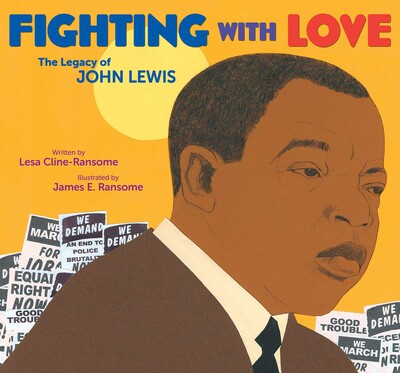
Another great companion book to Who Needs a Statue? Learn more about Tommie Smith and John Carlos.


Happy New Year! This book is a great companion to Who Needs A Statue!
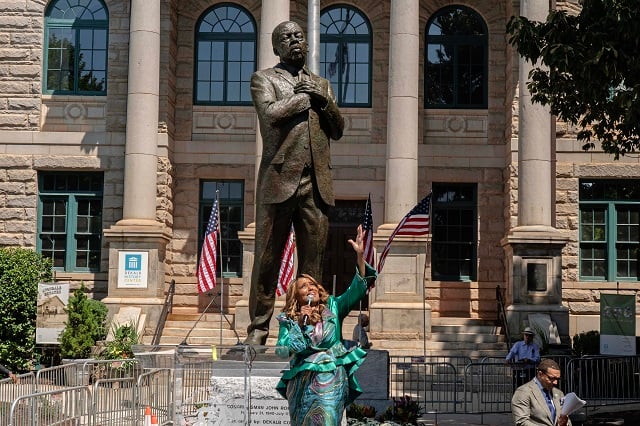
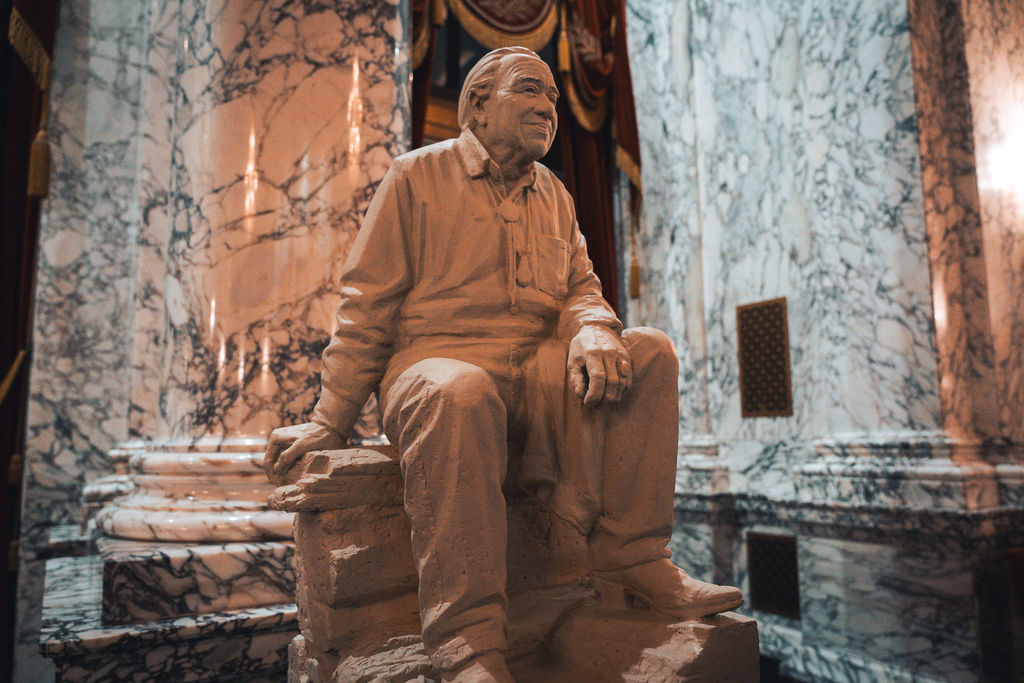
A statue of Barbara Johns will be added to the collection of 100 in 2025. Her story is in Who Needs A Statue?


A section of this book called “Compendium” begins: “The story is happening right now. Across the country, statues in public places are being added and subtracted.” A little history follows: “The 100 statues in the Capitol Collection are gifts from 50 states. The first statue was dedicated in 1864. … In 2000, the year that Congress first allowed states to replace their statues, 90 of the 100 depicted white men.”
When statues are replaced, it is sometimes said that history is erased. Another way to look at it is to say that at least some of the statues that have been removed took up spaces that displaced other exemplary historical subjects.
“Who Needs a Statue?” addresses not just who is worthy of such commemoration but why we need statues at all. Statues help us remember, of course, and they honor worthy people; each also tells a story, which is what Eve LaPlante and Margy Burns Knight do in their brief biographies, rendered with economy and insight.
“Outside the public library in Sharon, Massachusetts, Deborah Sampson wears her soldier’s uniform”: This is the caption accompanying a two-page illustration by Alix Delinois, showing a Revolutionary War scene with Americans and Redcoats firing at one another. Which one is Deborah Sampson? I can’t say for sure, and that is the point, as her biography implies:
“Fifteen-year-old Deborah wanted to fight in the Revolutionary War. Girls were not allowed to be soldiers, so she pretended to be a boy, put on an Army uniform, and reported for duty as a recruit named Robert. She helped lead a raid and was wounded in battle in 1782. Deborah used a penknife to remove the musket ball from her thigh, and closed the wound with needle and thread. She recovered and was promoted. After the war she was honorably discharged from the Army. No one had discovered her secret.”
Deborah Sampson’s is another kind of erasure from history that the statue and this book restore, showing, by the way, that needlework has all kinds of uses that can help win a war.
Near the beginning of “Who Needs a Statue?” is an illustration of a young African American boy next to statues of four illustrious-looking white Americans on pedestals in the Capitol. The boy has a question, as he frowns and puts a hand in his hair as if in thought: “How many are statues of women? How many are people of color?” Statues, after all, are meant to be representative, though the idea of representativeness keeps changing, which this book implies is the point of swapping out statutes.
“Who Needs a Statue?” includes biographies of Thocmetony Sarah Winnemucca, whose 1883 autobiography was the first book published by a Native American woman; Florence Sabine, the first woman in America to be named a full professor of medicine, at the Johns Hopkins School of Medicine; and more familiar historical figures like George Washington Carver and Anne Hutchinson. Kansas has replaced one of its statues in the Capitol with one of Amelia Earhart, the first woman to fly nonstop across the United States.
“Who Needs a Statue?” does not present arguments, only facts, such as: “In many states people are changing their minds about whose contributions should be honored.” That statement reminds me of Thomas Jefferson’s belief that while the present should honor the past, it does not always have to be bound by that past.
As the book’s title suggests, “Who Needs a Statue?” is meant to raise the questions that are present near its end: “Who else needs a statue in the Capitol? What other stories can we tell? Who will tell them? What other brave Americans helped make the world a better place? Do they need a statue, too?”
In other words, this book, like the commemoration of history, is incomplete.
“Who Needs a Statue?” is meant to provoke thought and to start discussions and to show that history is never a settled matter, and that what we value today may not be quite the same as what was valued in the past, or what may be valued in the future.
Mr. Rollyson is the author of “American Biography.”


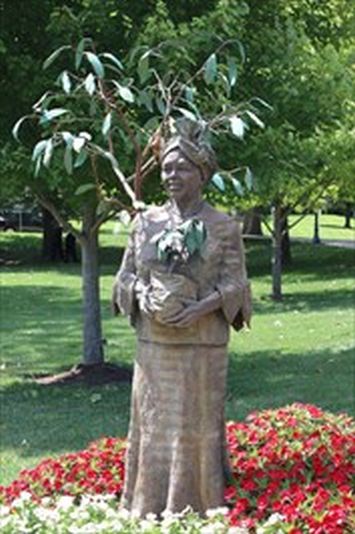
Whose accomplishments are commemorated in a public place, for all to see? Of the 100 statutes that stand in the U.S. Capitol Building in Washington, D.C., contextualizing text notes, nine represent people of color and 12 represent women. After offering brief biographies of a few (Paiute writer Thocmetony Sarah Winnemucca and Montana politician Jeannette Rankin, among others), LaPlante, making a children’s book debut, and Knight (Africa Is Not a Country) introduce sculptures across the country that immortalize people of color and women. A statue at San Jose State University honors sprinters Tommie Smith and John Carlos, who stood on the 1968 Olympic winners’ podium “without shoes as a symbol of poverty” and wearing “beads and scarves around their necks in memory of lynching victims.” A statue in Chicago’s Ping Tom Park represents Judge Laura Cha-Yu Liu, who in 2012 became the first Chinese American elected to public office in Chicago. Thickly stroked paintings by Delinois (Greetings, Leroy) show scenes from the subjects’ lives as well as the statues in their settings, in a reportorial work that opens conversations about public representation. Short biographies of those discussed in the text conclude. Ages 7–10. (Oct.)